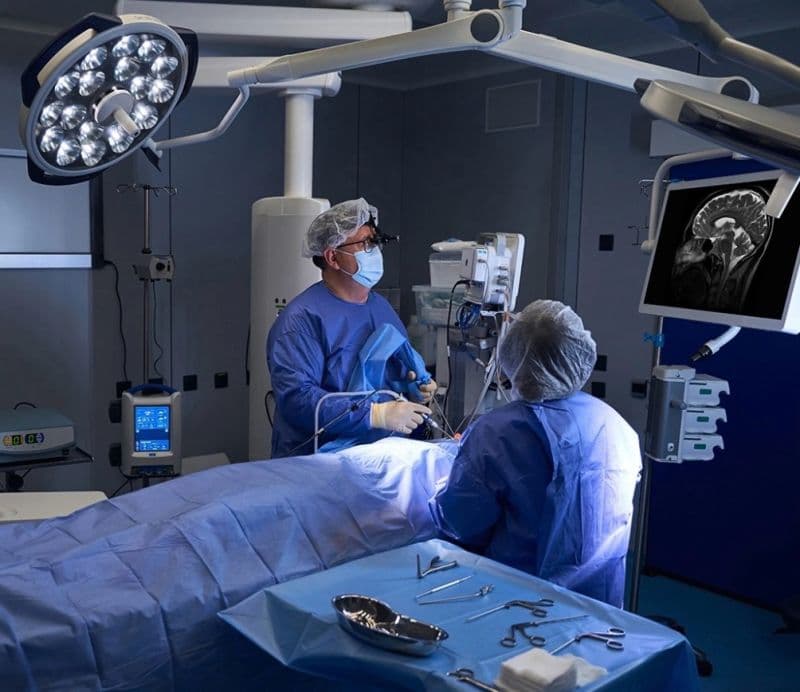
Spine Tumor Surgery
Surgery to remove or reduce tumors of the spinal cord and spinal column while protecting neurologic function and keeping the spine stable.
What Is Spine Tumor Surgery?
Spine tumor surgery is an operation to remove or reduce a tumor involving the spinal cord, the nerve roots, or the bones of the spine. It covers a range of procedures, from removing a tumor inside the spinal cord itself to relieving pressure from a metastatic tumor and stabilizing the spine with screws and rods. The right operation depends on what the tumor is, where it sits, and what it threatens.
Location matters more than almost anything else. Roughly half of spine tumors sit outside the covering of the spinal cord, and most of these are metastases from cancer elsewhere in the body. Another large group grows inside the covering but outside the cord, most often meningiomas and nerve sheath tumors. A smaller group grows within the spinal cord itself, such as ependymomas. Each location calls for a different surgical plan and a different conversation about goals.
The goals also differ by tumor type. For primary tumors like spinal ependymomas, the aim is usually complete removal, because the extent of resection is the strongest predictor of long-term outcomes. For metastatic tumors, the aim is usually to protect the spinal cord, restore stability, and relieve pain, often through a focused operation called separation surgery that prepares the area for high-dose radiation rather than attempting to remove every bit of tumor.
Dr. Sherman performs spine tumor surgery at Robert Wood Johnson University Hospital as Chief of Neurosurgical Oncology at Rutgers Cancer Institute, the only NCI-designated comprehensive cancer center in New Jersey. His fellowship training in neurosurgical oncology was completed at Memorial Sloan Kettering Cancer Center.
Call our office at 732-235-6333 or send us a message.
The information on this page is general educational information and is not medical advice. It does not create a doctor-patient relationship or reflect a treatment recommendation for any individual. Treatment decisions require an individual evaluation by a qualified physician.
Conditions Treated with Spine Tumor Surgery
Spine tumor surgery addresses tumors arising in or spreading to the spinal column and spinal cord. Each condition page covers symptoms, diagnosis, and the full range of treatment options.
Using XR Technology To Advance Medical Care
Dr. Sherman integrates VR and AR visualization into surgical planning and patient education, giving patients a clearer picture of their diagnosis and the approach to treatment.
Common Questions About Spine Tumor Surgery
It carries meaningful risks, and an honest answer does not minimize them. Published series report major complication rates up to about 14 percent, with infection, blood clots, and spinal fluid leak among the most common. The risk of new neurologic injury exists but is reduced by continuous neuromonitoring and microsurgical technique. For patients with cord compression or instability, the risk of not operating is often the larger one.
Newly Diagnosed or Seeking a Second Opinion?
Dr. Sherman is accepting new patients at Rutgers Cancer Institute in New Brunswick, New Jersey. Whether you have been told you need spine tumor surgery or you want another perspective before deciding, a consultation is the first step toward understanding your options.